
Course Overview
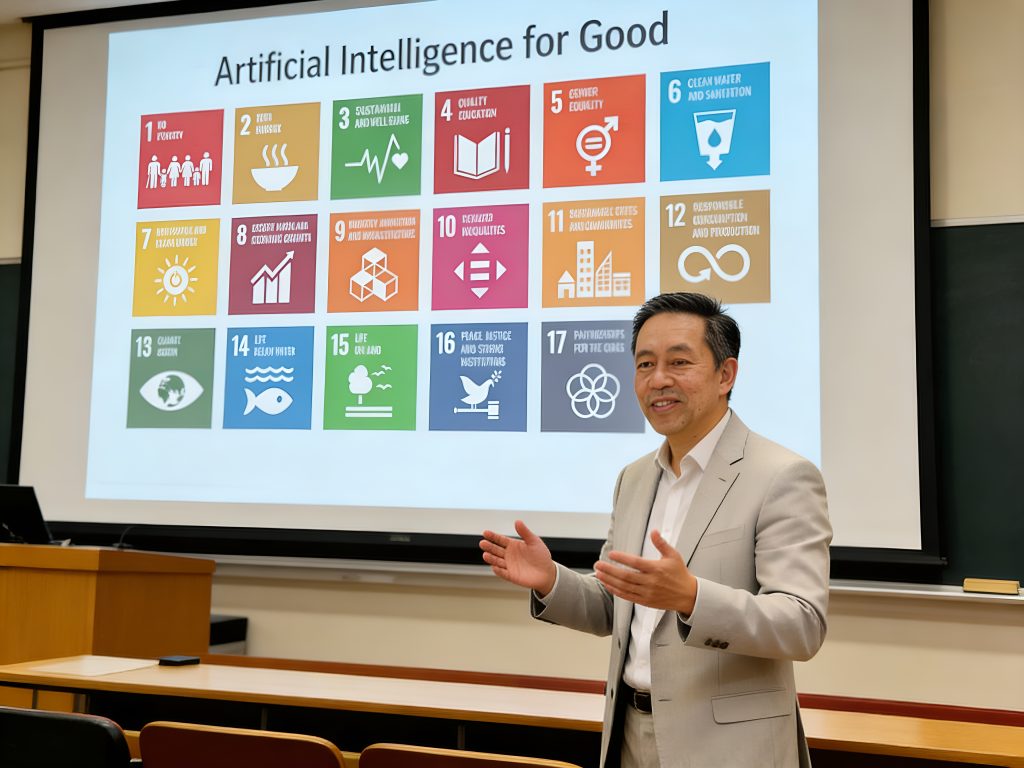
This lecture series explores one of the most consequential applications of modern AI: using artificial intelligence as a force for positive global change. Grounded in the United Nations’ 17 Sustainable Development Goals (SDGs), the course examines how AI tools and techniques can be deployed to address humanity’s most pressing challenges — from poverty and hunger to clean energy, sustainable cities, and environmental conservation.
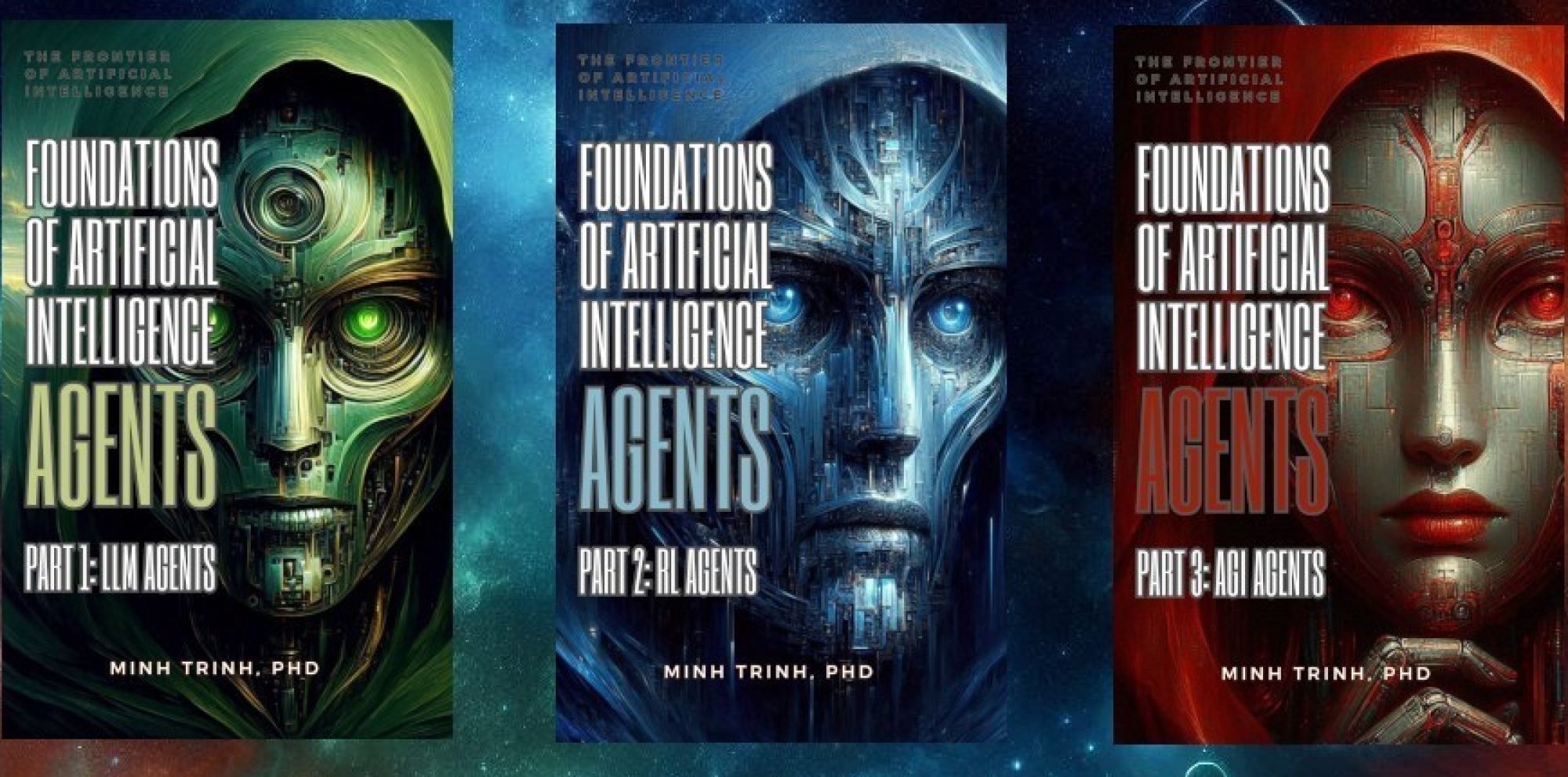
The series serves as a living companion to Minh Trinh’s AI for Good Handbook: Meeting the Sustainable Development Goals with Artificial Intelligence, part of his broader Artificial Intelligence Handbook Series. Lectures run between 40 and 60 minutes and are accessible to technically minded audiences with an interest in both AI and global development policy.
Course Modules
Lecture 1 — AI and Poverty (58 min) The series opens with arguably the most fundamental of the SDGs: the eradication of poverty. This lecture examines how AI-powered tools — from predictive analytics to mobile-based financial services — are being deployed to identify vulnerable populations, optimize resource distribution, and expand economic opportunity in underserved communities. It sets the conceptual and ethical framework that runs throughout the rest of the series, asking not just can AI help, but how and for whom.
Lecture 2 — AI and Hunger (46 min) The second lecture tackles global food insecurity, examining how AI is transforming agriculture and food systems. Topics include precision farming, crop yield prediction, supply chain optimization, and early warning systems for famine. The lecture explores how machine learning models trained on satellite imagery, weather data, and soil conditions are helping farmers and policymakers make better decisions — particularly in regions most vulnerable to climate-driven food shocks.
Lecture 3 — AI and Sustainable Cities & Communities (39 min) With more than half the world’s population now living in urban areas, this lecture focuses on how AI is reshaping city planning, transportation, public safety, and infrastructure management. It examines smart city initiatives, traffic optimization, energy-efficient building systems, and AI-assisted urban design — while also raising critical questions about surveillance, equity, and who benefits from algorithmic urban governance.
Lecture 4 — AI and Energy (43 min) This lecture addresses the clean energy transition, one of the most technically and politically complex of the SDGs. It surveys how AI is accelerating progress in renewable energy forecasting, grid optimization, battery storage management, and energy consumption reduction. The lecture also examines AI’s own considerable energy footprint — an honest and necessary tension the course does not shy away from.
Lecture 5 — AI and Nature (47 min) The series closes its SDG arc with the natural world — biodiversity, ecosystems, climate, and conservation. This lecture explores how AI is being used to monitor deforestation via satellite imagery, track endangered species, model climate systems, and optimize conservation resource allocation. It reflects on the broader relationship between technological progress and environmental stewardship, asking whether AI can genuinely help reverse ecological decline or merely slow it.
Lecture 6 — LLMs for Scientific Research (36 min) Expanding beyond the SDG framework, this lecture examines how large language models like ChatGPT are transforming scientific research across disciplines — bioinformatics, chemistry, physics, and the social sciences. It connects directly to the AI for Good mission by showing how AI-accelerated research can speed up solutions to the very challenges addressed in earlier lectures, while maintaining an honest discussion of current limitations.
Lecture 7 — AI and Sustainable Investing (47 min) The series concludes by bridging AI for Good with the world of finance. This lecture examines how AI is reshaping sustainable investing — integrating Environmental, Social, and Governance (ESG) objectives with financial return optimization. It challenges the traditional shareholder value maximization paradigm with concrete examples, and explores AI’s role in evolving corporate governance toward more responsible and accountable business practices.
Key Themes
A consistent thread runs through every lecture: AI is neither a guaranteed solution nor a neutral tool. Each module pairs genuine excitement about AI’s potential with sober analysis of risks — algorithmic bias, data access inequality, privacy concerns, and the danger of techno-solutionism that bypasses the political and social dimensions of global challenges.
The course also reflects a distinctive interdisciplinary sensibility. Students move fluidly between machine learning methodology, development economics, environmental science, urban planning, and financial theory — reflecting the reality that applying AI for good requires understanding the domains it is applied to, not just the technology itself.
Recommended Audience
This course is well suited for AI practitioners seeking to orient their work toward social impact, policy researchers and NGO professionals wanting technical literacy, graduate students in data science, public policy, or sustainability, and impact investors interested in AI’s role in ESG frameworks.
Companion Reading
AI for Good Handbook: Meeting the Sustainable Development Goals with Artificial Intelligence and the Artificial Intelligence Handbook Series — by Minh Trinh, PhD, available on Amazon.